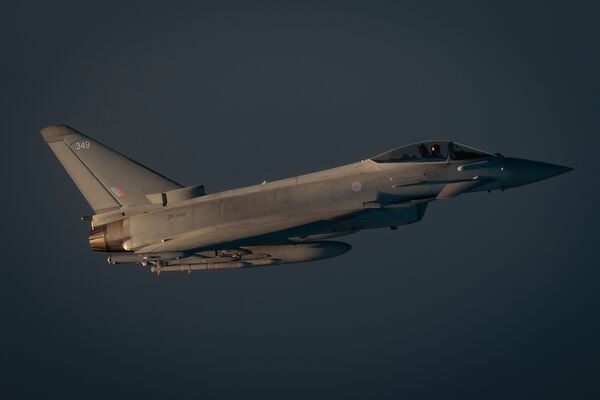
The geopolitical landscape of the Middle East remains a crucible of tension, with recent developments seeing the United Kingdom take decisive action to bolster its allies' defenses. In a significant move, British Prime Minister Keir Starmer recently announced that the UK would send fighter jets – specifically, four additional Eurofighter Typhoon planes – to Qatar. This deployment comes amid escalating regional instability, exacerbated by the ongoing conflict involving Iran and a recent drone attack on a British Royal Air Force base in Cyprus. The decision underscores a commitment to regional security and the evolving nature of modern warfare, where traditional air power meets sophisticated drone threats.
This strategic reinforcement is not merely a symbolic gesture. It represents a tangible effort to strengthen defensive operations in Qatar and across the broader Gulf region, particularly as concerns about the security of vital shipping lanes and critical infrastructure mount. The accompanying deployment of Wildcat helicopters with advanced anti-drone capabilities to Cyprus further highlights the UK's proactive approach to mitigating sophisticated, asymmetric threats.
UK Reinforces Gulf Defenses Amid Rising Tensions
The announcement by Prime Minister Starmer, following a critical drone strike on the RAF Akrotiri base in Cyprus, signals a clear intent to project stability and deter aggression. The four additional Typhoon jets will integrate with an existing UK squadron stationed in Qatar, enhancing air superiority and interdiction capabilities. This deployment is a direct response to a volatile environment where state and non-state actors alike possess increasingly capable unmanned aerial systems (UAS).
The Immediate Response: Typhoons for Qatar, Wildcats for Cyprus
The Eurofighter Typhoon is a highly versatile, multi-role combat aircraft, renowned for its air-to-air superiority and increasingly capable air-to-ground precision strike abilities. By adding these formidable machines to Qatar's defensive posture, the UK aims to provide a robust deterrent against potential aerial incursions and to enhance the region's overall air defense umbrella. Qatar, a key partner in regional security, benefits directly from this enhanced capability, which is crucial for protecting its airspace and critical national assets.
Simultaneously, the decision to send Wildcat helicopters equipped with anti-drone systems to Cyprus addresses a more immediate and specific threat. The recent drone attack on RAF Akrotiri, identified as Iranian-made, demonstrated the vulnerability of even well-protected military installations to these insidious weapons. The Wildcats' specialized capabilities, including advanced sensors and countermeasures, are designed to detect, track, and neutralize such threats, providing a crucial layer of defense against a rapidly proliferating technology.
Why the Urgent Deployment? Understanding the Geopolitical Landscape
The backdrop to these deployments is the so-called "Iran war," a term used to describe the complex web of proxy conflicts, maritime tensions, and strategic competition involving Iran and its allies across the Middle East. From ballistic missile threats to sophisticated drone operations and disruptions to global shipping in the Red Sea, the region faces multifaceted security challenges. The drone strike in Cyprus underscores the reach and intent of these actors, making proactive defense measures imperative.
UK Defence Secretary John Healey's visit to Cyprus following the attack further highlighted the urgency and cooperative spirit underpinning these actions. Discussions focused on "reinforcing our air defences to support our shared security," an acknowledgment that collective action is essential to counter these complex threats effectively. The situation also brought to light challenges in information-sharing, with Cypriot authorities expressing disappointment, emphasizing the critical role of transparency and collaboration in alliance management.
The Strategic Imperative: Why UK Chose to Send Fighter Jets to Qatar
The decision to deploy advanced fighter jets is never taken lightly. It involves significant logistical, financial, and strategic considerations. For the UK, sending Typhoons to Qatar is a calculated move designed to achieve several key objectives:
- Deterrence: A visible increase in advanced air power acts as a deterrent to potential aggressors, signaling a strong commitment to regional stability.
- Defense: The Typhoons augment existing air defense systems, providing enhanced capabilities to intercept and neutralize aerial threats.
- Assurance: It reassures allies like Qatar of the UK's commitment to their security and the broader security of the Gulf.
- Interoperability: Working alongside existing UK and Qatari forces, these jets improve operational readiness and coordination in the event of a crisis.
Air Dominance in the Modern Era: 4th vs. 5th Generation Fighters
The discussion around fighter jet capabilities is always relevant when considering such deployments. While the Eurofighter Typhoon is a highly advanced 4.5-generation fighter, its capabilities are continually upgraded. This context is vital when considering the broader implications of Canada's Fighter Jet Choice: F-35 Superiority vs. Gripen Value, where the debate often centers on the leap from 4th generation platforms (like the CF-18s) to stealth-enabled 5th generation fighters like the F-35.
For regional defense needs, a modern 4.5-generation platform like the Typhoon, with its advanced avionics, radar, and weapon systems, offers significant advantages. It provides superior air superiority against most regional threats and can deliver precision strikes. The ongoing modernization of such platforms ensures they remain relevant and highly effective, even as 5th generation aircraft become more prevalent.
Countering Evolving Threats: The Drone Challenge
The drone strike on RAF Akrotiri is a stark reminder that modern warfare is increasingly characterized by asymmetric threats. Drones, particularly those with advanced guidance and evasion capabilities, pose a significant challenge to traditional air defenses. The cost-effectiveness and proliferation of these systems mean that even non-state actors can possess formidable aerial capabilities. The deployment of anti-drone Wildcat helicopters is a pragmatic response, highlighting the necessity of multi-layered defense strategies that combine high-end fighter jets with specialized counter-UAS platforms.
Beyond Deployment: The Complexities of International Military Alliances and Procurement
Deploying fighter jets, whether for defense or deterrence, is often intertwined with complex geopolitical and economic considerations. The UK's decision, while directly responding to a crisis, also operates within the larger framework of international military alliances and defense procurement strategies.
Navigating International Pressures and Domestic Concerns
Decisions about which fighter jets to acquire or deploy often involve intense political pressure, as seen in the Canadian context described in US Threatens Canadian Airspace in F-35 Deal Standoff. While the UK's deployment to Qatar is a proactive defensive measure, it reflects broader principles: allies rely on each other. The procurement process for advanced aircraft, whether for domestic use or international commitments, is subject to scrutiny over cost, capability, and the political implications of choosing one manufacturer over another. Nations must balance their strategic requirements with economic realities and the preferences of their closest allies.
For Canada, the debate over F-35s versus Gripens highlights the tension between maximizing technological superiority (F-35) and pursuing a more cost-effective, potentially dual-platform approach (Gripen). This illustrates the dynamic interplay between military leadership preferences, national sentiment, and the influence of powerful allies or manufacturers.
The Cost of Security: Investment in Advanced Capabilities
Maintaining air dominance and effective defense capabilities is an expensive endeavor. Investment in advanced fighter jets, anti-drone technologies, and ongoing modernization programs is crucial for national security. The fatigue of airframes, as observed with older fleets like the CF-18s, underscores the continuous need for either significant upgrades or outright replacement. The UK's decision to reinforce its presence demonstrates a commitment to this ongoing investment, recognizing that cutting-edge technology is vital to counter evolving threats effectively.
Strengthening Resilience: Practical Insights for Regional Security
The UK's deployment of Typhoons to Qatar and Wildcats to Cyprus offers several critical insights into effective regional security strategies in a complex world:
- Proactive Deterrence: Rapid, visible deployment of advanced capabilities can deter potential aggressors and stabilize volatile regions.
- Multi-layered Defense: Combining high-end fighter jets with specialized counter-UAS platforms is essential to address the full spectrum of modern aerial threats, from advanced aircraft to swarming drones.
- Alliance Strength: The willingness of nations to support allies with tangible military assets reinforces alliance bonds and collective security.
- Continuous Modernization: Even established platforms like the Typhoon require continuous upgrades and strategic additions to remain effective against evolving threats.
- Information Sharing and Transparency: As evidenced by the Cypriot critique, effective communication and transparent information sharing between allies and with local populations are crucial for managing expectations and maintaining trust during crises.
Enhancing Information Sharing and Collaborative Defenses
The disappointment voiced by Cypriot officials regarding information sharing after the drone attack highlights a vital lesson: military cooperation extends beyond hardware. Robust intelligence sharing and transparent communication protocols are just as critical as the number of jets deployed. Collaborative defense frameworks, whether formal alliances like NORAD (as referenced in the Canadian context) or bilateral agreements, depend heavily on timely and accurate information exchange to coordinate responses and alleviate public concern.
Future-Proofing Air Defense Strategies
The proliferation of drones, particularly those leveraging AI and swarming tactics, demands a constant re-evaluation of air defense strategies. Future air defense will likely be a highly integrated network, combining traditional fighter patrols with ground-based air defenses, electronic warfare capabilities, and dedicated counter-UAS systems. The UK's current deployment reflects this understanding, adding both conventional air superiority (Typhoons) and specific anti-drone measures (Wildcats) to the regional security mix.
In conclusion, the UK's decision to send fighter jets to Qatar and anti-drone helicopters to Cyprus is a significant and timely response to the increasing volatility in the Middle East. It underscores a strategic commitment to defending allies, deterring aggression, and adapting to the evolving nature of modern warfare. By combining advanced air power with specialized counter-drone capabilities, the UK aims to enhance regional security and project a strong stance against threats that continue to destabilize a critical geopolitical arena. This move serves as a powerful reminder of the indispensable role of robust air defenses and strong international alliances in maintaining peace and stability.